From Caesar's point of view
TRIUMPH
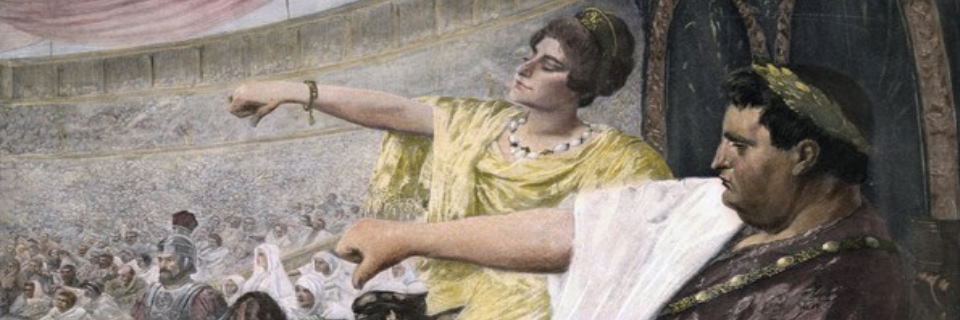
From Caesar's perspective, the Colosseum was an important political tool.
Caesar provided to the people of Rome free food and entertainment at the Colosseum. This increased his popularity and secured his position of power.
Vespasian commissioned the construction of the Colosseum as a 'gift' to the Roman people. The goal was panem et circenses(bread and circuses). He wanted to provide entertainment to distract the Roman people from their discontent and win people's support.
The events in the Colosseum reflected the different cesars wish to strengthen their rule. For example victorious battle reenactments made the people proud of Rome's power, the courage of gladiators the greatness of the Roman warrior.
The emperor Titus (39AD-81AD), the son of Vespasian who commissioned the construction of the Colosseum, was the first emperor to host events here. He held one hundred days of games to celebrate the opening of the Colosseum. This was an unprecedented spectacle in entertainment, and the people of Rome loved it.
Even though he died at the age of 41, and was emperor during the great fire of Rome and the eruption of Mt Vesuvius occurred, he was still regarded as one of Rome's most popular emperors.
There was a political significance of the architecture and design of the Colosseum itself. The amphitheatre was built upon former emperor Nero’s lake deliberately, representing a handing back of land to the people after confiscation of property that occurred under his rule.
In addition, the sheer scale of the construction symbolised the greatness of Rome.
People of Rome
Both tragedy and triumph
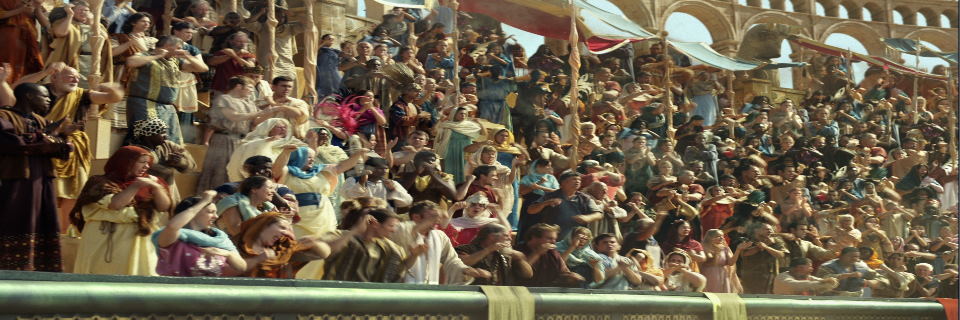
The people viewed the Colosseum as their place of entertainment.
Although it was the custom for people to go there, not everyone appreciated the Colosseum. Stoic-philosopher Seneca the Younger expressed his distaste at the event. He felt that it was a punishment in itself to watch the killing. In his Moral Epistles IV he writes "what crime have you committed, poor fellow, that you should deserve to sit and see this show?"
However Seneca, being a stoic-philosopher may have been in the minority as many people still watched the games. Perhaps because of peer preasure, or it may be that Rome really was a bloodthirsty society that loved to see gladiators and criminals killed.
The Colosseum was the Super Bowl or Grand Final of it's time. People of Rome relished in seeing people they considered lower than themselves slaughtered, as historian Garrett G. Fagan noted in his book "The Lure of the Arena," a central part of the experience of the Colosseum was "a feeling of shared empowerment and validation."
Gladiators
TRADGEDY
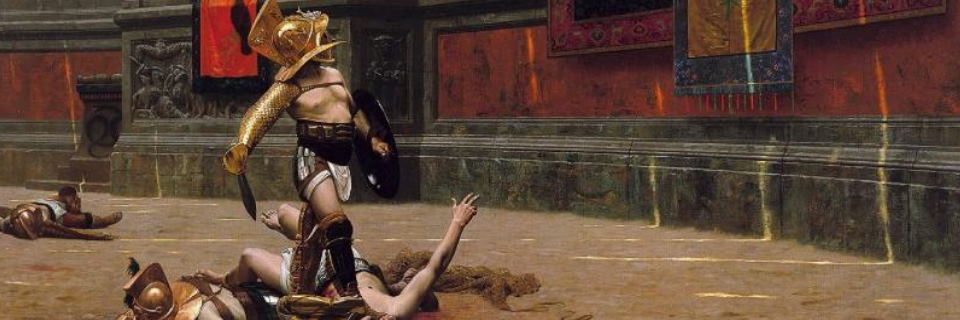
These were people that were fighting for their freedom. The gladiators were a group of people who fought. Some came in volutarily, but many were slaves or people with large debts to pay. They would be trained in a gladiator school, then sent to an amphiathere to fight.
Prior to the Colosseum, gladiators had a 90% chance of surviving their fight as it cost for a gladiator to be replaced and those that hosted the games had to pay this cost.
After the arrival of the Colosseum, in the first 100 days of the gladitorial games, Titus, to gain the peoples appreciation, made many gladiators to loose their lives, and loss of gladiators life became more common.
This continued to escalate through the emperorors until the baning of gladitorial contests by emperor Constantine in 325 AD.
History
Both tragedy and triumph
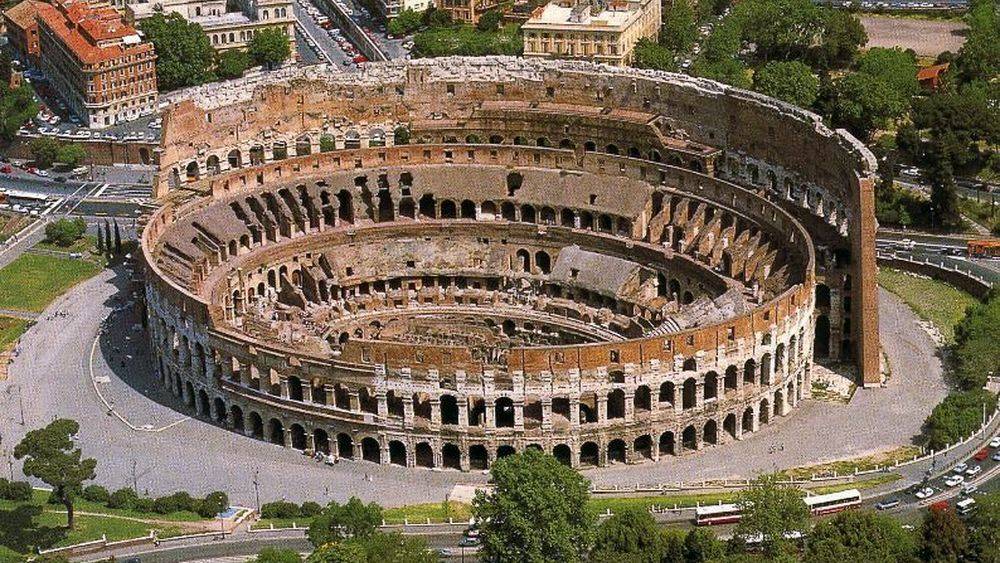
From a historian’s point of view, the colosseum is both a tragedy and a triumph.
A triumph of architecture - The colosseum is an incredible work of architecture and the sheer size that the Romans were able to build it with the tools they had at hand is astounding. Another factor was the drainage. The Romans built the Colosseum over what once was Nero’s decorative pond. For the Romans to remove the water they had to create a complex draining system that would not only drain the water from the pond but also drain the stormwater that would inevitably collect around the colosseum. The architects had to get the angles of the pipes just right to that the pipes wouldn’t get clogged or back up.
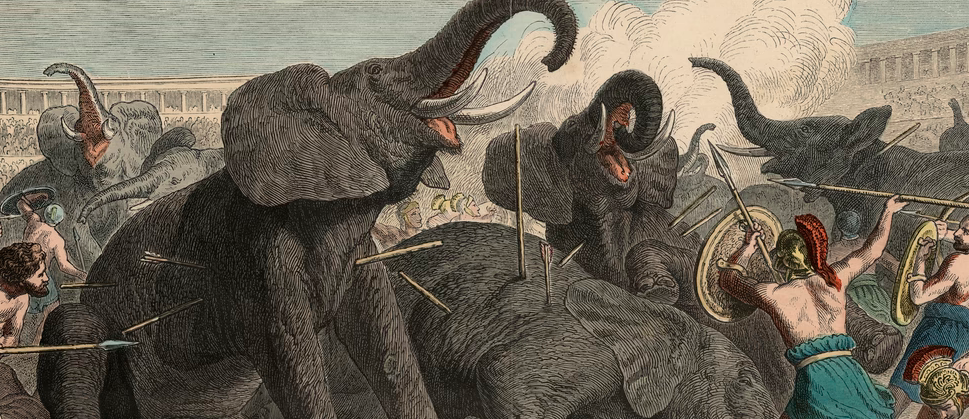
The tragedy of the Colosseum is as an example of human brutality - Even the events leading up to the building of the Colosseum were brutal and many artifacts were ruined. For example, for the Romans to build the Colosseum, they had to pillage Jerusalem and take all their ancient treasures that it contained. The pillaging of this meant that the Romans would have shown little regard for the history and culture of these people, looking only for profit. The events held inside the Colosseum were just as brutal. Executions were turned into a kind of sick sport and gladiatorial games, which used to be just a friendly joust for the people’s entertainment, turned into a bloody, ruthless battle. Wild animals were tortured for people’s entertainment and blood lust encouraged for Caesar’s political gain.
Architecture
Triumph
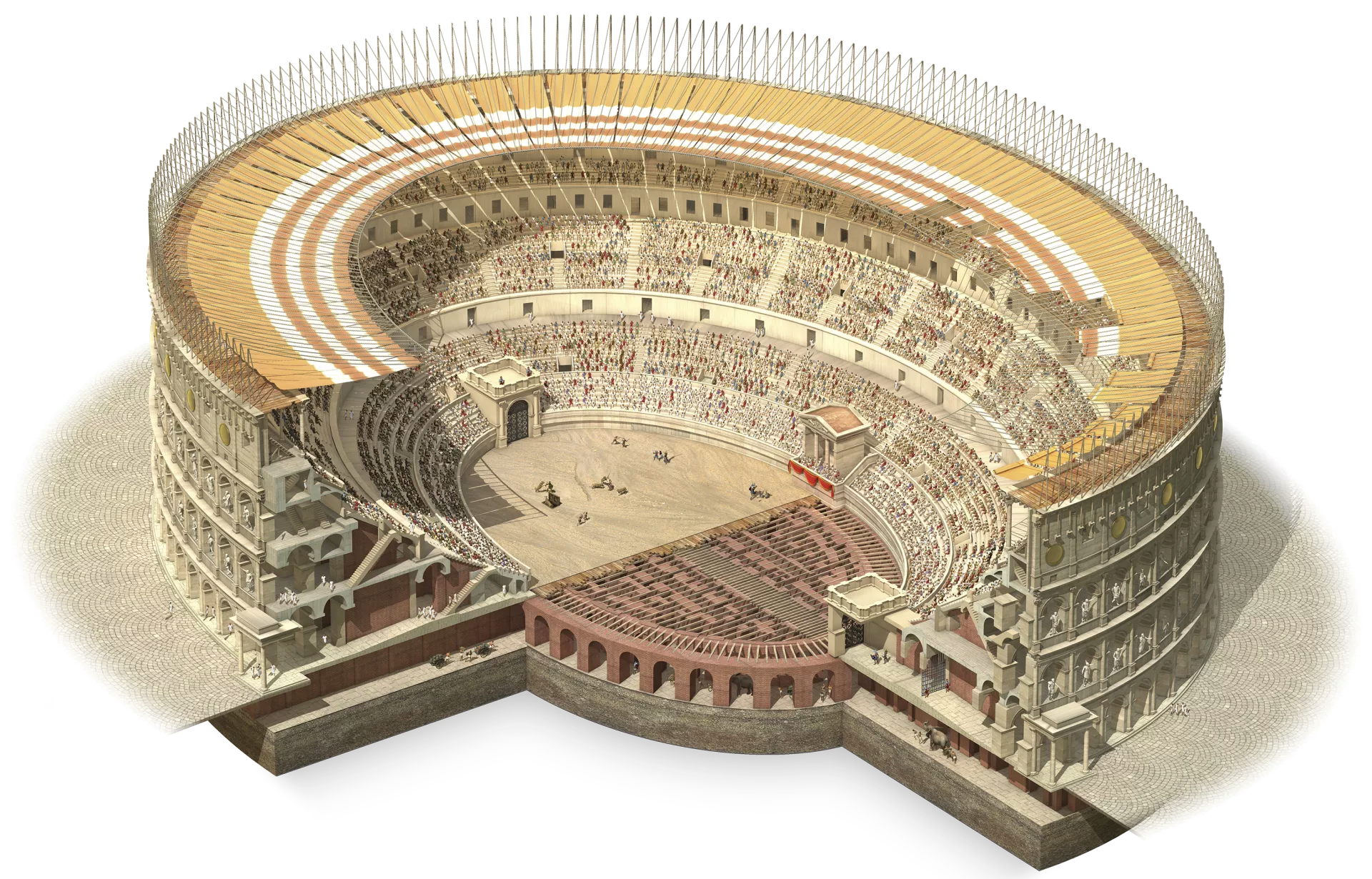
From the Architect’s point of view, the Colosseum was a triumph. It is the larges ancient amphitheatre ever built. The Romans had limited tools, and the largest things that they built were houses that stood 3m above ground at the most. However, the outer wall of the Colosseum stood at 48m tall, with a shading mechanism which would have been extremely impressive for its time and an impressive drainage system.
The outer wall is estimated to have needed over 100,000 cubic metres of stone held together by iron clamps.
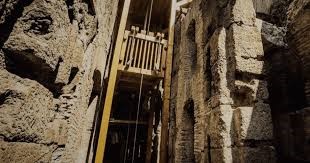
However, the Colosseum wasn’t just impressive because of its size on the outside, there was an underground area. This was where they stored the exotic animals and criminals, and to appear on the colosseum’s sandy floor, they were raised up through a special lift which worked with help from many pullies. This shows that from the Architect’s point of view the Colosseum is a triumph.
The Romans built the Colosseum over what once was Nero’s decorative pond. For the Romans to remove the water they had to create a complex draining system that would not only drain the water from the pond but also drain the stormwater that would inevitably collect around the colosseum. The architects had to get the angles of the pipes just right to that the pipes wouldn’t get clogged or back up.